The operation is aimed at maximising service delivery.
City of Johannesburg officials gather to inspect council flats earlier this year.
In a bid to reduce service delivery protests across Johannesburg, Operation Lokisa, which means fix, or sort out in Sesotho, was spearheaded by the Chair of Chairs in the council, councillor Alex Christians. The aim is to attend to specific and urgent issues that were raised by residents a long time ago but not attended to. Christians and the chairpersons of Section 79 committees conducted an oversight visit to various old-age homes around Westdene, Riverlea and Reuven. Website Website Website The MMC for Finance, Funzela Ngobeni, who is also the leader of executive business, and the newly appointed MMC for Housing, Meshack van Wyk also joined the inspection. “Among other things, this programme should be able to enhance communication and interface with community members; review, monitor and evaluate departmental policies; plans and the budget implementation impact,” Christians said. He also cautioned that departments should not over-promise communities when there is no budget committed for projects.
Monday, July 9, 2018
Tourists have been offered training with the famous Cosmo City grannies
Tourists have been offered training with the famous Cosmo City grannies‚ braai-ing and gardening in the city. Now Airbnb is looking for other unique local experiences to attract international guests. The Johannesburg experience will include packing mean punches with Coach Claude Maphosa and his team‚ the “boxing grannies”‚ who are ready to help you stay healthy and fit. When you meet them for a session in the morning‚ you will be paired with a granny who will be your partner for the training. The experience is R250 per person. “Get ready to sweat and have fun with our team of trainers and grannies. We will end the training with some soft drinks and feedback on how the session went‚” said Maphosa. For just R250 per person, tourists can train with the Cosmo City Boxing Grannies, as part of an Airbnb experience.
For just R250 per person, tourists can train with the Cosmo City Boxing Grannies, as part of an Airbnb experience.
About 30 experiences have been registered on the Airbnb website for Johannesburg. The company is calling for other provinces to join in the network. An authentic Jo’burg walk is R400 per person‚ exploring the city on skateboards is R300 per individual and many more exciting activities. And in the city of Cape Town one can do cool stuff like walking with penguins‚ cleaning up the beach and yoga on the shore. “The expansion of experiences across all of South Africa will help to boost tourism outside of city centres by attracting more people to rural and regional areas. Experiences help spread the benefits of hosting to those who do not have space in their house to rent out‚” said Velma Corcoran‚ country manager for Airbnb South Africa. “This is also a fantastic way for visitors and locals to experience parts of South Africa that they would otherwise miss had it not been for these Experiences led by passionate locals.” Travellers can get their hands dirty with an urban farming experience through Airbnb. Travellers can get their hands dirty with an urban farming experience through Airbnb. Image: Supplied Tourists can book an abstract art class through Airbnb experiences. Tourists can book an abstract art class through Airbnb experiences. Image: Supplied Experiences are activities that are led by local hosts‚ highlighting their interests and perspectives as well as unique places. “You don’t need to have a home on Airbnb to be a member of the experience. This is a platform for entrepreneurs to showcase their work and gain traction on their unique and vibrant services‚” said Kelly Lodewyks on behalf of Airbnb. Here are some experiences. A Culture Run in Cradle of Humankind; Explore urban gardening with a farmer; Pubs, Bars & Rooftops Walk.
Two suspects at large
COSMO CITY – Police are on the hunt for two suspects in connection with a business robbery. Captain Balan Muthan warns that those who break the law will face the consequences. Honeydew police are on the hunt for two suspects allegedly involved in a business robbery. Earlier this week, three suspects, one armed with a pistol, entered the spaza shop in Cosmo City. According to police spokesperson Captain Balan Muthan, the suspects allegedly attacked one of the shop’s staff while they were unloading stock from a delivery van. “From there, the suspects entered the shop and took R6 500 in cash, two cell phones, airtime and cigarettes before fleeing the scene in a white Nissan truck they had arrived in,” alleged Muthan. Website Website Website The shop owner contacted Honeydew police and one of their patrol vehicles was already in the area. They immediately searched for any leads. They spotted the suspects’ truck and a chase ensued. The suspects abandoned the vehicle and started to flee on foot. “The officers arrested one of the suspects while two managed to get away. The truck was taken in as part of the investigation as well as one cell phone, some cash and airtime.”
Saturday, June 30, 2018
State slammed for not executing warrants of arrests
JOBURG – Magistrate tells the state it must put its money where its mouth is. She said saying warrants are issued is not enough, they must be executed.
The case against six men accused of being part of syndicate conducting robberies at malls across the province was postponed at the Randburg Magistrates' Court.
Magistrate Gayle Pretorious gave the state a tongue lashing for not executing warrants of arrests that the state claimed to have in its possession. On 27 June, six men accused of being part of a syndicate that have been conducting robberies in Gauteng appeared before Pretorious in the Randburg Magistrates’ Court.
The six were arrested in September last year, on allegations that they had plotted to rob a cell phone store at Fourways Mall. The six were arrested together with three police officers, stationed at Douglasdale Police Station. The state has since withdrawn the case against the three police officers.
The six have been charged with conspiracy to commit a robbery with aggravating circumstances, possession of unlicensed firearms and possession of prohibited firearms
At their previous appearance, the state told the court that it had in its possession, warrants of arrests against some of the accused persons. Defence attorney Idemudi Uriesi told the state that he wanted to see the original copies of those warrants. At the time, state prosecutor Yusuf Baba only had them on a soft copy as they were emailed to him by the investigating officer. An agreement was made that the originals will be handed to the defence, but that has not happened.
Pretorious asked the state why it had not executed the warrants that it said it had against the accused persons. The magistrate told the state that a warrant of arrest was a crucial document that cannot be left lying around, it must be executed.
“Issuing a warrant is not enough. You must put your money where your mouth is. Execute those warrants,” Pretorious told the state.
Baba said his hands are tied at this stage as he relied on the investigating officer to execute the warrants. He also said he was also still waiting for the officer to furnish him with the original warrants, as he only had them on email.
The case has been remanded to 16 July, where it is expected that the state will give the court clarity on the warrants and for the defence to be furnished with transcripts of the previous bail application of some of the accused persons.
Council dismisses manager for ‘gross misconduct’
JOBURG – The manager was removed by council in June.
Executive Mayor Herman Mashaba says he expects opposition to label this move as 'purging'.
Among these, according to Executive Mayor Herman Mashaba, he was found guilty of intentionally failing to execute the lawful policies of the council, gross insubordination towards council, the City manager and him (the mayor).
“[He refused] to perform his functions in good faith and contravened the Code of Conduct for municipal staff contained in Schedule 2 of the Systems Act,” the mayor said.
The role of this position is a crucial function that helps the City in setting high-level strategic plans.
Mashaba said that in his ruling, the disciplinary hearing’s presiding officer found that ‘the employer has discharged its onus to prove that the employee is guilty of the charges. The evidence is uncontested’.
Mashaba said he expects opposition to label this move as ‘purging’.
“We remain clear that those who are found guilty of improper conduct have no place in this government.”
Fatal crash families need help
KYA SAND – CPF appeals to the community to assist families with burial costs.
The Douglasdale Police Station's vehicle crashed into four people and killed them instantly.
The Douglasdale Community Policing Forum has extended a helping hand to the Kya Sand families involved in the fatal pedestrian accident with police.
As reported in Two mothers and their children killed, Week ending 22 June, the accident which occurred on 14 June saw two women and two children knocked down by police on their way home. The vehicle lost control, killing them instantly.
The forum has banded together to help the grieving families with donations and assist with funeral and burial costs. Douglasdale forum member Freda Boiles said they consulted the families and want to provide as much assistance as possible. “We are appealing to the community for donations to help the families to alleviate the costs of burying their loved ones.”
While the families are struggling with the cost of the burials, there is still no word on the investigation into the fatal accident. Independent Police Investigative Directorate (Ipid) has taken over and according to spokesperson Moses Dlamini, the investigation is ongoing.
If you are able to help with donations or related services, please contact Boiles on 084 315 7281 or fredaboiles@gmail.com. Alternatively, make a donation to the Douglasdale Community Policing Forum Bank Account: Nedbank Fourways, Branch Code 168405, Account Number: 1684008441, Reference: Funeral.
City of Joburg to release more than 600 new title deeds
Patricia Buys is seen recieving her title deed at the Eersterust Civic Centre where MMC for human settlements in Tshwane, Mandla Nkomo handed out 89 title deeds.
The title deeds, which will be released over the next financial year, are part of a plan to release 3 500 new title deeds in total.
Over the next two weeks, the City of Johannesburg will be releasing more than 600 new title deeds to Joburg residents.
New housing MMC Meshack van Wyk said in the coming 2018/19 financial year, the City aimed to release some 3 500 title deeds. This, he said, would empower the poorest residents, who would be able to give their families the security of permanent tenure.
“Sadly, the dignity of living in a safe home or the ownership of one remains a pipe dream that has washed away the hope of millions of people waiting for service delivery for decades,” he said.
“It is estimated that some 30 000 accommodation units are required in the short term to address the needs of the most vulnerable households.”
Van Wyk explained that, therefore, the current administration wants to speed up the delivery of title deeds. The City has, over the last two years, delivered more than 5 000 title deeds across Joburg.
Readily available WiFi key to smart cities
SA business decision-makers acknowledge that wider availability of WiFi would contribute to a smart city strategy, although majority of them don't feature smart city projects in their budgets.
Riaan Graham, sales director for Ruckus Networks, Sub-Sahara Africa.
This is according to the 2018 WiFi in South Africa report recently released by Ruckus Networks, an ARRIS company, and business technology research firm World Wide Worx.
The group surveyed IT decision-makers at 106 large (100 or 200 staff members) local companies on their attitudes to smart cities, with an additional sample of 20 small and medium businesses (up to 100 employees) also being interviewed to give an overall view.
According to the report, 95% of the interviewed leaders believed that readily available WiFi would be beneficial to the development of a smart city strategy, adding that some of the major benefits of smart cities include boosting the economy and attracting new business.
Notes the report: "While SA is still a long way from having a true smart city, business decision-makers are aware of its benefits.
"Albeit only 24.5% of businesses feature smart city projects in their budgets, a figure which can be considered relatively high, given that the smart cities is a relatively new concept and no South African city has a clear programme in place to achieve this.
See also
Expect more WiFi zones in Joburg
Quality WiFi prioritised over cost: SA report
"Even more, a substantial proportion (37.8%) of companies expect to have a budget for smart city projects in the future."
Barriers to smart cities
The survey found that 76% of respondents indicated that fibre infrastructure is the biggest tech barrier to smart cities roll-out. This was followed by the lack of an IOT ecosystem, no unified view for the city and infrastructure stability.
It noted: "Approximately 20% of respondents found the barrier to smart cities were non-technology related with the lack of funding cited by 71% of respondents. This was followed by the cost of access at 40%. These findings suggest that financial issues are the core challenge facing smart cities.
Riaan Graham, sales director for Ruckus Networks, Sub-Sahara Africa, says infrastructure and connectivity lie at the heart of smart cities.
"We still have many challenges that are making the development of smart cities difficult, but we are working towards getting the foundational elements right.
"If we look at SA, a number of the major cities are undergoing phases of re-urbanisation, where we are also seeing new town or city centres coming up, like Cosmo City near Kaya Sands, Johannesburg, for example.
"The pace of this implementation process varies between city centres, and is largely being driven by demand from the growing populous in these cities, and resultantly the growing stress on available infrastructures, service delivery and the effects of climate change that are forcing local governments and town planners to think more innovatively and engage in steps to transform these centres into smarter cities.
"Most of the major cities in the country have the necessary basic infrastructures needed to move towards a smarter model, however, available capacity and access remain a challenge in under-developed nodes.
"What we need to realise is that infrastructure and connectivity lie at the heart of smart cities where connectivity allows for effective data collection to ensure positive growth within the cities, tailor-made to fit the needs of the people and as well as addressing unique challenges they might be faced with."
City developments
Both Johannesburg and Cape Town aspire to become smart cities. Currently, their focus is most keenly observed in the delivery of forward-thinking transport routes, and these are definitely delivering investment opportunities in new areas.
By integrating technology into services, both cities are well on their way to becoming 'smart'.
Last year Cape Town was recognised as a major tech hub, with potential to be a rising global player, and ranked number 22 among the world's top tech cities. Meanwhile, Johannesburg has expanded access to its free WiFi network as part of the city's smart city programme.
"Looking at the broader African region, we are faring well. A case in point is Nairobi having introduced smart street lamps that use LED lighting, saving the city money on energy costs.
"Additionally, the lamp poles have WiFi embedded in them which helps with air quality probes and with the installed IOT be installed, which is one of the key building blocks to smart cities and CCTV cameras can be connected as well.
"Nairobi is fast-tracking the smart city race and already has a smart system in place that can adapt to the changes in the environment in an effort to provide integrated and intelligent services to the city," noted Graham.
Young leader setting an example
Nhlanhla did not allow himself to be swallowed up by the many social ills that have destroyed the youth of Zandspruit.
Zandspruit Sports Forum founder, Nhlanhla George Nkosi, walking the dusty streets of Zandspruit.
“It’s not about where you come from, but where you’re going.”
Zandspruit-born Nhlanhla George Nkosi’s life journey speaks exactly to those inspiring words.
Nhlanhla did not allow himself to be swallowed up by the many social ills that have destroyed the youth of Zandspruit. After realising that someone had to stand up for change in the impoverished community, the 34-year-old leader founded the Zandspruit Sports Forum, a project which he uses to tackle social challenges. He also joined the Ward committee in 2011, in support of his mission to change his birthplace for the better.
“I saw a challenge in the young people who were getting involved in substance abuse. I realised that this was due to the lack of service delivery in Zandspruit,” he said.
This fuelled Nhlanhla’s vision – of a Sports Development Forum, which would focus on different sporting codes. The idea became a reality and so he started setting his short-, medium- and long-term goals, in a bid to combat social ills such as abuse, and encouraging child-headed families to get the best education they could.
Nhlanhla is a Witwatersrand University student who is studying towards a Bachelor’s Degree in Politics. His hard work has not gone unrecognised as he earned an opportunity to work in the Minister of Labour’s office in Pretoria. Added to this achievement, he was re-elected as part of the Ward 114 committee, where he represents the younger generation in his community.
As netball and soccer seem to be the most favoured sports in Zandspruit, Nhlanhla said his long-term wish is to build a recreational centre where he can expose the youth to other sporting codes. “My long-term vision is to have a recreational centre that will cater for all sporting facilities as well as a stadium for local clubs to have a home ground. This will allow us to produce professional soccer teams and show our talent to the nation and the entire globe,” he said.
Over the years, other organisations, such as Impophomo, have begun to show an interest in Nhlanhla’s plan to enhance change through education and sports.
Never to old to learn
NORTH RIDING – The University of the Third Agers (U3A) explain what it is they do.
University of the Third Agers (U3A) shared on their history and why they are so important for the retirees who form part of this group.
The group’s name was coined to refer to retirees who are no longer in full-time employment. U3A began in 1972 in France, where faculty members and working academics were the course facilitators and lecturers. It spread to the United Kingdom with the realisation that third agers had skills to organise and teach their own autonomous learning groups and has been adopted in over 36 countries around the world.
There are seven branches in Gauteng, one of which are in North Riding (Johannesburg North Branch) and another in Hurlingham (Johannesburg Branch).
We spoke to Margaret Britz, a member of the North Riding branch. She explained the branch boasts a membership of about 600 members as of last year December. “U3A runs from February to November each year in keeping with the University recesses.”
Their subscription is R50 per year and includes listening to one speaker/lecturer per month. These talks are held at the Gereformeerde Kerk Randburg in Northwold on the first Tuesday of every month. “Once a member, you are entitled to join our Special Group Interests, which are held at various venues. For your pleasure we have walking, art and opera,” said Britz.
She added that they discuss South African literature, play bridge and scrabble and learn about line-dancing, photography and even the Spanish language. The group also holds a bi-monthly social luncheon at various restaurants and go on various outings to different places and exhibitions. “We invite all retirees to visit us. You may come as a visitor to any lectures for R20.”
Britz said that anyone who joins them will make new friends and maybe meet old friends they worked with years ago – what more could anyone ask for?
Details: Margaret Britz 011 475 0756; 073 281 8620.
Members of U3A Joburg North Branch on a recent excursion to Pilanesberg.
The group’s name was coined to refer to retirees who are no longer in full-time employment. U3A began in 1972 in France, where faculty members and working academics were the course facilitators and lecturers. It spread to the United Kingdom with the realisation that third agers had skills to organise and teach their own autonomous learning groups and has been adopted in over 36 countries around the world.
There are seven branches in Gauteng, one of which are in North Riding (Johannesburg North Branch) and another in Hurlingham (Johannesburg Branch).
We spoke to Margaret Britz, a member of the North Riding branch. She explained the branch boasts a membership of about 600 members as of last year December. “U3A runs from February to November each year in keeping with the University recesses.”
Their subscription is R50 per year and includes listening to one speaker/lecturer per month. These talks are held at the Gereformeerde Kerk Randburg in Northwold on the first Tuesday of every month. “Once a member, you are entitled to join our Special Group Interests, which are held at various venues. For your pleasure we have walking, art and opera,” said Britz.
She added that they discuss South African literature, play bridge and scrabble and learn about line-dancing, photography and even the Spanish language. The group also holds a bi-monthly social luncheon at various restaurants and go on various outings to different places and exhibitions. “We invite all retirees to visit us. You may come as a visitor to any lectures for R20.”
Britz said that anyone who joins them will make new friends and maybe meet old friends they worked with years ago – what more could anyone ask for?
Details: Margaret Britz 011 475 0756; 073 281 8620.
The Northgate Road Race is back
NORTHGATE – Record numbers (and times perhaps) are expected at this year’s Northgate Road Race so get ready to run.
You had better put your running shoes on because the Northgate Road Race is back!
Northgate Shopping Centre is expecting a record turnout this year at their 22nd annual Road Race on 8 July, after last year’s 3 000 smashed previous attendance records.
In addition to the 10km run and 5km fun run – which is walked by many – this year will see the first 10km professional walking race, so there really is something for everyone!
The race is fast becoming popular not only with runners and sports clubs but with families and the community in general, who enjoy a fun and active start to the day. The race welcomes everyone and sees walkers and runners from all ages hit the road in the name of fitness and, importantly, fun.
“This is the first major run after the Comrades Marathon and many runners use it to launch into their training after a good rest, and others simply enjoy a sunny and active start to a chilly day with family, friends or colleagues,” said Natalie Kinsley, marketing manager of Northgate Shopping Centre, where the race starts and ends (Entrance 4).
Race director, Charlie Herselman of the Roodepoort Athletics Club, said the Northgate Road Race gets bigger and better every year. “It really is a nice easy route for the average runner to finish.”
Entry fees for the race have been kept low, and all participants will receive a medal. In addition, the first 800 entries of the 10km race and the first 150 entries of the 5km race will receive a
T-shirt. Prizes up to R750 per runner are also up for grabs across the age category spectrum. Visit www.entrytime.com to enter – pre-entries close on 4 July, but you can always enter on the day of the race from 6am at Entrance 4 of Northgate Shopping Centre. The starting gun will fire at 7.30am for the 5km and 10km runs, and at 7.40am for the 10km walk.
Race numbers and T-shirts can be collected between 9am and 3pm on 7 July outside Entrance 4 of Northgate Shopping Centre, or from 6am on the morning of the race.
So, why not bring the family or come along with your friends, grab a coffee before the race (Wimpy opens especially early on the day) and come and enjoy the race.
Details: Northgate Shopping Centre 011 794 1687, Charlie 082 770 1143.
Randburg Harriers runners show their support at last year's Northgate Road Race.
You had better put your running shoes on because the Northgate Road Race is back!
Northgate Shopping Centre is expecting a record turnout this year at their 22nd annual Road Race on 8 July, after last year’s 3 000 smashed previous attendance records.
In addition to the 10km run and 5km fun run – which is walked by many – this year will see the first 10km professional walking race, so there really is something for everyone!
This year’s Northgate Road Race may have around 3 500 runners take part, beating last year’s
3 000.
The race is fast becoming popular not only with runners and sports clubs but with families and the community in general, who enjoy a fun and active start to the day. The race welcomes everyone and sees walkers and runners from all ages hit the road in the name of fitness and, importantly, fun.
“This is the first major run after the Comrades Marathon and many runners use it to launch into their training after a good rest, and others simply enjoy a sunny and active start to a chilly day with family, friends or colleagues,” said Natalie Kinsley, marketing manager of Northgate Shopping Centre, where the race starts and ends (Entrance 4).
Race director, Charlie Herselman of the Roodepoort Athletics Club, said the Northgate Road Race gets bigger and better every year. “It really is a nice easy route for the average runner to finish.”
The Northgate Road Race is always a hit.
Entry fees for the race have been kept low, and all participants will receive a medal. In addition, the first 800 entries of the 10km race and the first 150 entries of the 5km race will receive a
T-shirt. Prizes up to R750 per runner are also up for grabs across the age category spectrum. Visit www.entrytime.com to enter – pre-entries close on 4 July, but you can always enter on the day of the race from 6am at Entrance 4 of Northgate Shopping Centre. The starting gun will fire at 7.30am for the 5km and 10km runs, and at 7.40am for the 10km walk.
Race numbers and T-shirts can be collected between 9am and 3pm on 7 July outside Entrance 4 of Northgate Shopping Centre, or from 6am on the morning of the race.
Get your running shoes out because the Northgate Road Race is back.
So, why not bring the family or come along with your friends, grab a coffee before the race (Wimpy opens especially early on the day) and come and enjoy the race.
Details: Northgate Shopping Centre 011 794 1687, Charlie 082 770 1143.
Understanding scoliosis
JOHANNESBURG - As part of Scoliosis Awareness Month, We spoke to experts to get their opinions on what scoliosis is, how to test for it and how it is treated.
A medical drawing depicting a normally shaped spine versus a twisted rear and front view of scoliosis.
As part of Scoliosis Awareness Month, we spoke to Rowan Berkowitz of Berkowitz Shnier Orthotists and Prosthetists to get his expert opinion on what scoliosis is, how to test for it and how it is treated.What is Scoliosis?
According to Berkowitz, scoliosis has several causes and is defined as a lateral curvature of the spine in the frontal plane of the body, which means that the spine curves from side-to-side.
“Normally, the spine is straight, as seen from the front or behind. With scoliosis, the spine curves to the side in the shape of the letter ‘S’ or ‘C’,” Berkowitz said.
The most common form of scoliosis is termed ‘idiopathic’, which literally means of unknown cause or origin and may occur in early childhood or adolescence. Scoliosis may occur anywhere in the spine but is usually found in the lower and mid back regions.
A diagram showing a scoliosis affected spine in a human.
How can I tell if my child has Scoliosis?
“A proper diagnosis must be made by a medical practitioner or scoliosis professional, but a simple two-minute evaluation of your child will give you an indication if further investigation and treatment is required,” Berkowitz said.
On its website, www.scolicaresa.com Berkowitz and fellow scoliosis researcher, Dr LouAnn Rivett, have put together a free simple-to-follow guideline you can use to determine whether your child needs further investigation.
Berkowitz continued, “If you are concerned that your child may have scoliosis, Scheuermann’s disease, or other postural deformities of the spine, consult your healthcare practitioner. They will request X-rays of the spine to confirm a diagnosis. They may wish to refer you to an orthopaedic surgeon who specialises in disorders of the adolescent spine, a scoliosis physiotherapist or orthotist for further treatment.”
What are the treatment options?
According to Berkowitz, treatment protocol depends on several factors such as skeletal maturity, size of the curve, other underlying conditions and considerations.
The condition may be monitored with X-rays, physiotherapy may be advised, bracing either full-time or night-time or surgery may be recommended. This applies to both scoliosis and hyperkyphosis (Scheuermann’s disease).
Berkowitz said, “There is a perception that neither specific physiotherapy nor bracing is effective. This is not correct. There is a lot of clinical data on trials and international research studies, which have been conducted, proving the effectiveness of both physiotherapy and bracing.
“Research has also shown that general fitness exercises and some other exercises can make the condition worse. However, specific methods such as the Schroth method (Germany) and the Seas Method (Italy) have shown favourable results and improve the condition. These methods are conducted only by therapists trained in these methods.”
Berkowitz added that the earlier the problem is detected, the more effective the treatment is and, naturally, compliance is a key factor.
Details: www.scolicaresa.com
Thursday, June 21, 2018
Take a look at the new Madiba centenary commemorative bank notes and coins
The South African Reserve Bank (SARB) will be launching its first commemorative banknote series, in celebration of the first democratically elected president Nelson Mandela’s birth centenary.
SARB announced that they will print all denominations – R10, R20, R50, R100 and R200 notes. As part of the celebrations, the South African Mint, a subsidiary of the SARB, will also be issuing a new commemorative circulation R5 coin.
Madiba would have been a hundred-years-old this year on 18 July and the country is geared to celebrate with a series of commemorative events. SARB is preparing for the launch of the notes and R5 coin. Test packs of the commemorative banknotes were made available to members of the broader cash industry to allow them to make adequate preparations in relation to issues such as adaptions of cash processing and cash dispensing machines, ticketing machines and so forth.
Even though these test packs were governed by strict confidentiality provisions, the SARB says that certain breaches have occurred, and as a result, some of the designs have been circulating on social media. The SARB decided to release all the designs ahead of the official launch scheduled for 13 July 2018 in order to avoid confusion and unnecessary speculation.
More detailed information about the commemorative features of the notes and additional security features will be made available at the time of the official launch.
They said that these notes will be issued into circulation by 18 July 2018 and will co-circulate for a limited time, together with the current Mandela banknote series and the existing R5 coin.
R10 note
R20 note
R50 note
R100 note
R200 note
R5 coin
Police investigate two house robberies 1 in Cosmo City 1 in Randpark Ridge
In one of the house robberies, the suspects gained entry through a window that had been left open for the cat to get in and out.
Honeydew Police spokesperson, Captain Balan Muthan.
Two cases of house robbery in separate suburbs are being investigated by the Honeydew Police.
Spokesperson for the station, Captain Balan Muthan, stated that the incidents, one each in Cosmo City and Randpark Ridge, happened a day apart.
In the early hours of 19 June, a couple was robbed by three suspects, one wielding a gun, at their home in Cosmo City. “They were awoken by the sound of the door being kicked by the suspects. The suspects told them to lie down, covered them with a blanket and made off with a television and two cellphones,” said Muthan.
The next day, 20 June, a house was robbed at 4.30am in Randpark Ridge, while the victim, who was left with bruises, was asleep. According to Muthan, the victim had left her lounge window open for her cat. This allowed the criminals to gain entry into the house, after scaling the wall around the property. “The suspects told the complainant they wanted cash and jewellery,” Muthan explained.
Muthan added that the suspects came across a laptop bag and took two laptops, two cellphones and a quantity of jewellery before fleeing the scene.
No vehicles were seen, and no shots were fired during either incident.
These Cosmo City gogos are great
COSMO CITY – Fire safety for the community
Gogos are given Jozi fire safety kits at Cosmo City Firestation.
In a concerted effort to reduce fire fatalities, the Johannesburg Emergency Management Services visited Cosmo City to educate the community about fire safety.
Through the Public Information, Education and Relations Department responsible for public education, 50 elderly women from the community were identified.
This group of gogos form part of the Cosmo City’s Community Emergency Response Team.
This is part of the emergency services’ initiative of building resilient communities and communities that are capable of dealing with any emergency that might occur in their areas. Since the beginning of June, Emergency Management Services has handed over safety kits in various informal settlements in Johannesburg.
Fires are mostly caused by the following:
Candles that are not placed in proper candle safety jars to prevent them from falling
Using open fires for cooking in a confined space with highly flammable materials such as imbaula (braziers), which also cause from inhaling the toxic smoke
Illegal electricity connections
n The most recent causes which are difficult for the City to deal with are the fires started in love triangles where couples fight and deliberately set the entire settlement on fire.
Wednesday, June 20, 2018
Dainfern Lions set to take part in the World Youth Cup
DAINFERN – The club was founded on fundamentals such as respect, unity and the love of the beautiful game.
Dainfern Lions Football Club is set to compete in the Gothia Cup -The World Youth Cup in July.
With Dainfern Lions Football Club set to take part in the Gothia Cup – The World Youth Cup in July, chairperson Nic Papas gave some insight into the club.
“Dainfern Lions has gone from strength to strength since I took over six years ago. We got our new kit this year and our little Barcelona look-a-like kids are very excited for their new kit,” Papas said.
He added that the club was founded on fundamentals such as respect, unity and the love of the beautiful game. “Dainfern Lions club is situated here inside Dainfern Estate. We are an official club and are affiliated to the Rand Central Football League and play matches on weekends.”
He highlighted that they accommodated many players from Diepsloot and Cosmo City, which was thanks to the club’s sponsors.
Dire need for more fire engines despite new acquisitions
Joburg mayor Herman Mashaba may have celebrated this week after handing over four new fire engines to Joburg Emergency Services (EMS), but the fire engine shortage in the city is far from over.
The Saturday Star is aware of two major blazes in the past few weeks where a fire engine was not dispatched due to unavailability.
At the King’s School in Robin Hills, Randburg, pupils and the school’s fire safety officer were forced to put out a blaze that began in a stretch of veld directly next to the property.
According to the school's health and safety officer, Mark Lentz, the fire broke out on the afternoon of May 25 at the public park next to the school. The dry grass caught fire quickly, with the blaze approaching the outskirts of the school at a rapid pace, according to Lentz.
He said the school receptionist had contacted emergency services at least three times to ask for a fire engine to quell the blaze, but none had arrived.
Luckily, the school has a programme starting in Grade 10 to train its high school pupils in putting out such fires, as well as creating fire breaks around the property to help prevent fires from spreading.
The pupils and Lentz were able to put out the flames, but Lentz said he was wary of what would have happened if wind speeds had been higher.
“The school was safe, but it could easily have been damaged with stronger winds. Luckily we have plans in place for that too,” he said.
Meanwhile, another fire broke out on June 7 at Delta Park, also in Randburg. According to Ward 99 councillor, Nicole van Dyk, the Blairgowrie Community Association had informed her of the fire and that no fire engine had arrived, though firefighters had arrived with beaters two hours after the blaze had been reported.
“There is a shortage of fire engines, but the city is working on it. There are historical reasons: the engines weren’t maintained (by the previous administration) and took far too long to fix them,” said Van Dyk.
Joburg Public Safety MMC Michael Sun confirmed that a further 20 engines were still required, as the city wished to deploy at least one more to each station.
This week, the city deployed four engines to the Florida, Lawley, Ivory Park and Eldorado Park stations. Earlier this year, three other engines were handed over to Fairview, Jabulane and Cosmo City.
Last year, the city cancelled a R161million contract to procure fire engines, allegedly because of poor service delivery from the provider.
However, Sun said that while the contract was cancelled, the city had decided to allow the company to partially continue its contract, but that a new tender would be put out “in the near future” to find a new service provider.
Tuesday, June 19, 2018
4 killed by Police van in Kya Sand
KYA SAND – A police van reportedly ploughed into pedestrians, killing four on Thursday 14 June .
Four people were confirmed dead following an accident on Agnes Avenue in Kya Sand.
According to eyewitnesses, a police van allegedly careered into the pedestrians killing them instantly.
Two police officers also sustained injuries and have been transported to hospital.
The road was closed off and motorists are urged to use alternative routes.
The two on-duty police officers from Douglasdale police station were driving along Main Road when the four people, including two children aged five and seven, were killed.
"The police members were injured and taken to hospital," police spokesperson Captain Mavela Masondo said.
"A case of culpable homicide has been opened and will be transferred to the Independent Police Investigation Directorate (IPID) for further investigation."
The SAPS wished to convey its condolences to the families of the deceased and would give IPID full support during the investigation, Masondo added.
Inequality and violent protests in South Africa
“Inequality is found around the globe, but the World Bank says South Africa qualifies as the starkest example. For a vivid example of it, Johnny Miller of the Unequal Scenes Project sent a drone over northwest Johannesburg. On the left is Kya Sands, a shack city that is home to many economic migrants who arrived from other African nations. Across the road is Bloubusrand [sic], a middle-class suburb known for its diverse mix of residents.”
The photograph sums up in undeniable visual terms what many people in South Africa are still in denial about – the unsustainable inequality characteristic of this society, and the fundamental need to change this state of affairs. Just how urgent, if not imperative, the need to address this inequality is, lest it should bring us to the brink of social anarchy, if not civil war, was forcibly impressed upon me by events on the road from Greyton to Port Elizabeth yesterday.
When I stopped at Sedgefield to fill up with petrol, I heard people talking about the ‘trouble in the direction of the Tsitsikama toll gate’. When I inquired about the nature of the ‘trouble’, they described scenes of protest, stone-throwing (at motorists) and burning tyres in Plettenberg Bay, Knysna and The Crags, near Storms River. It was too late for me to turn around and take the inland route, so — when they told me the police were on the scene — I decided to take my chances.
I must have sat in long lines of cars and trucks along that road, listening to radio updates, for at least two hours, trying to get some reading done on my Kindle in-between moving forward at a snail’s pace and stopping again a few kilometres further. When we got to Plettenberg Bay there was a heavy pall of smoke hanging over the road ahead, and the police re-routed motorists along the back road past Robberg to avoid the flash points of the protests.
Meanwhile I heard on the radio that the protests emanated from dissatisfaction with lack of houses, electricity and basic services. On the road to PE from there I had plenty of time to think about the significance of these ugly scenes of confrontation between police and shack dwellers, and the direction in which my thoughts took me was not reassuring. What the TIME photograph, together with its caption, said in fairly abstract terms, had been brought vividly to life in these scenes, and I realized that they do not augur well for the future in this beautiful, but benighted country.
Recently similar protests occurred in towns near where my partner and I live, namely in Hermanus, Caledon, and just last week in Bot River, causing us huge delays getting to Cape Town for an interview at the Portuguese consulate for visas (that us poor South Africans are always subjected to). And every time it is the same story: dissatisfaction with the living conditions that these people have to put up with. Hence, my train of thought along the road back to PE inexorably led me to the conclusion, that – unless things could begin to change tangibly fairly soon – we are in for escalating violence in South Africa. I would hesitate to say in all seriousness that ‘the revolution has begun’, but when one really considers quite honestly the chasm between the haves and the have-nots in South Africa, even that — the uprising of the poor — is not beyond the realm of the possible.
And, to get back to Verhaeghe’s work on inequality, the root of the problem (as Verhaeghe — a Belgian in a wealthy country where inequality, far less severe than in South Africa, is already showing alarming social effects — has shown), lies in the fact that South Africa chose to go the American neoliberal model way in 1994, namely dog-eat-dog capitalism. Which is excellent for the rich, and those who got all the opportunities in the world to get rich, but which is, by the same token, terrible for the poor, and those who do not get these opportunities. Social democracies like those of Scandinavia and western Europe would have been far better models to emulate.
Unless the South African government, together with civil society, can figure out a way to cross the gap between the rich and the poor, things are bound to get much worse from here on. The hopes that some people are placing in the land-redistribution programme seem to me excessive; even if the ‘expropriation without compensation’ principle allows more land to be given to the landless, there’s no guarantee that they would be able to translate this into self-sustaining wealth. And that is not even going into the question, what kind of land should be expropriated – if productive farmland would fall under the axe, as it were, it would be counter-productive, and risk food-shortage. (It seems to me that state-owned land, of which I am told there is plenty in the country, would be the best land to distribute among would-be farmers, provided they are taught how to farm, and provided the poor would benefit from this.)
Another avenue that would potentially bear fruit as far as alleviating poverty is concerned, is to teach people how to practice permaculture, as one of my erstwhile doctoral students, now Dr David Pittaway, has argued in his doctoral thesis (on the link between the looming ecological crisis and capitalism). He should know: together he and his partner started and built up a permaculture project outside of Port Elizabeth that enabled them to get pretty near to being self-sufficient as far as food goes. Imagine this being taught to poor people with access to land. In an economy where all that people can ever hope for is ‘jobs’, the ability to feed oneself in a dignity-enhancing way would be a good alternative, and may go a long way towards staving off further protests.
When the NPA chooses not to prosecute, how does a victim achieve justice?
JOBURG – Private prosecution must be instituted in the name of the private prosecutor, and the process documents issued in the name of, and at the expense of, the private prosecutor.
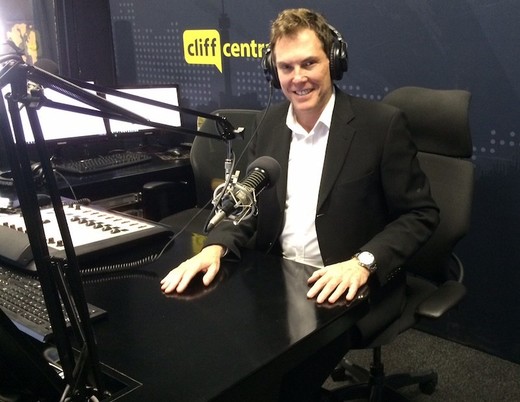
Garry Hertzberg, practising attorney at Dewey Hertzberg Levy and host of the Laws of Life with Garry Hertzberg on Cliffcentral.com
Not all reported cases make it to court. Sometimes crime victims are left with unanswered questions when they are told that their docket is back from court and no prosecution will take place.Garry Hertzberg, practising attorney at Dewey Hertzberg Levy, takes us through how this happens and what crime victims or complainants can do if they find themselves in such a situation.
Hertzberg explains that in criminal matters, it is usually the state that prosecutes.
“This means that the state brings the case before a court and presents the evidence to try and get a conviction. ”
The National Prosecuting Authority is not mandated to bring every case before a court; it has the discretion to prosecute or not, and they base this decision mainly on the availability of evidence.
If it does happen that the NPA choose not to prosecute, how then does a victim achieve justice?
Hertzberg highlights that the South African Criminal Procedure Act (CPA) makes provision for private prosecutions. The NPA issues a declaration stating that it will not prosecute.
“Once this is done, the victim then has three months to institute proceedings. Private prosecution must be instituted in the name of the private prosecutor, and the process documents issued in the name of, and at the expense of, the private prosecutor.”
He, however, pointed out that before the private prosecutor can go ahead he or she must make a deposit with the court as security that the charge will be prosecuted without delay.
According to Hertzberg, the state will pay the expenses of the private prosecutor if a conviction is secured in this way, but conversely, if the accused is acquitted, the court could order that his or her expense be paid by the private prosecutor.
The NPA can stop a private prosecution if it wants to prosecute the matter itself. Also if the accused in a private prosecution pleads guilty, the prosecution must be continued by the state prosecutor.
“This process can be very expensive, and the risks are great but it may be well worth it in the end to secure a well-deserved conviction,” Hertzberg concluded.
Subscribe to:
Posts (Atom)